
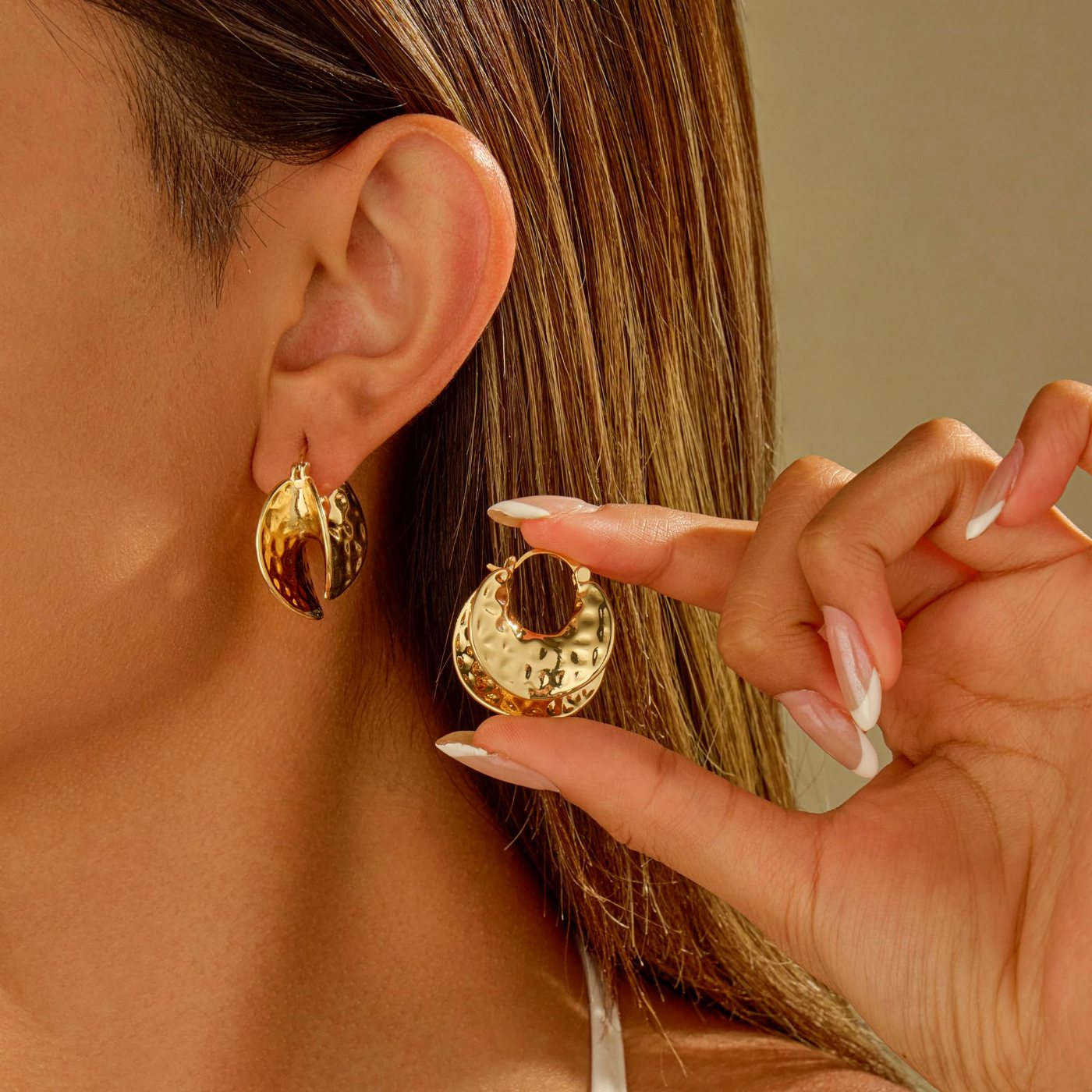
The front of an earring is what you choose. The back decides whether it is still on your ear after a coat, a scarf and a long phone call. Every YUJIE product page names the back in its Details table where our data has it, and here is what each one does.
Why the back matters as much as the front
A back holds the earring at a certain angle and with a certain grip. A drop on a secure back hangs straight and faces forward. The same drop on a loose back tips and twists, and a stud on a slack clutch sits away from the lobe and looks smaller than it is.
The back also decides how the pair behaves in your day: how fast you can swap it, whether it catches on a hat, and how easily a piece can go missing on the train.
The push back
A push back is a straight post that goes through your piercing and a small clutch that slides onto it from behind. It is the simplest back there is and the quickest to change, and our enamel bow studs use it.
It is also the easiest to lose. Slide the clutch on until it sits snug against the lobe, with a little resistance when you pull it off. If it slides off with no effort at all, the clutch has worn or the post has bent, and the earring will not stay put for long.
The lever back
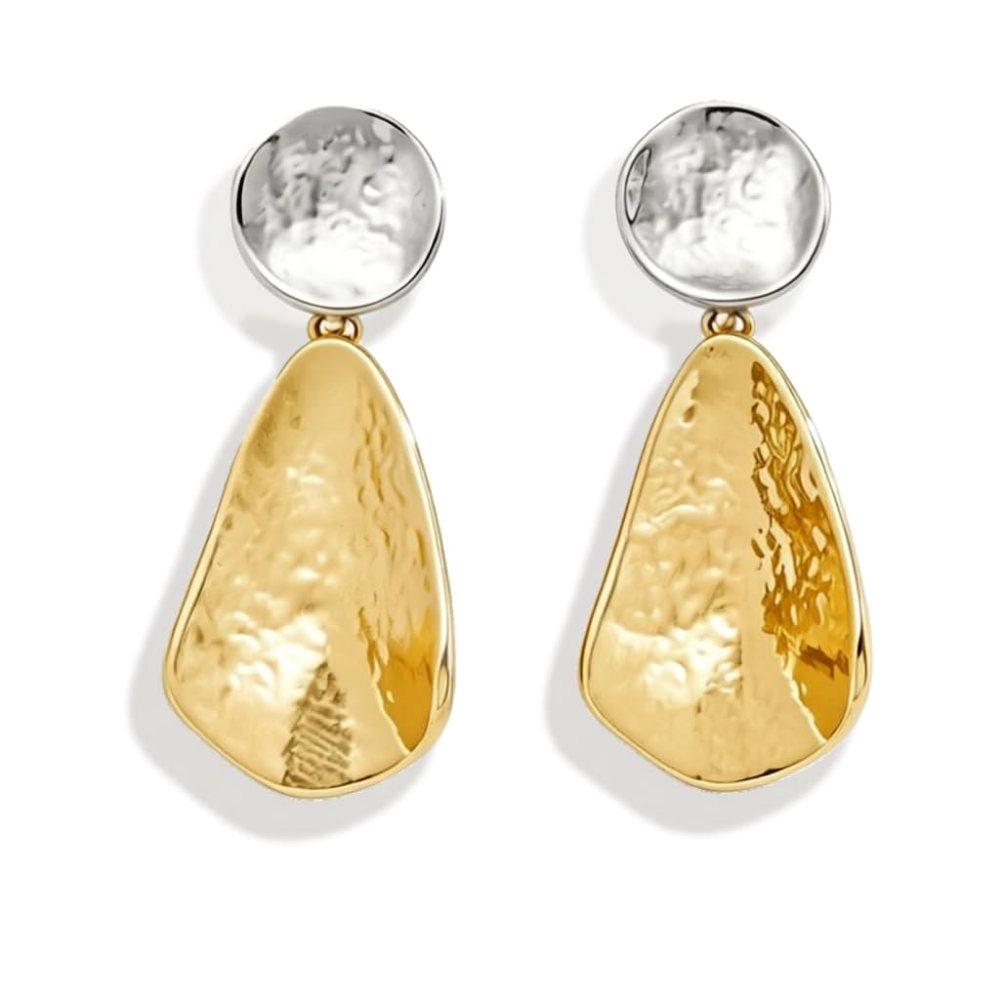
A lever back has a curved wire that goes through the piercing and a small hinged lever at the back. Swing the lever up and it snaps over the end of the wire, closing the loop. Nothing can slide off, because the loop is closed until you open it.
It is the most common back in our catalog, and the one most of our drops use. Open it by moving the lever, not by pulling the wire outward: bending the wire again and again is what loosens the snap.
A lever back suits anything that hangs and moves. The closed loop keeps a hammered teardrop or a bow drop facing forward as you turn your head.
Hinged hoops and latch backs
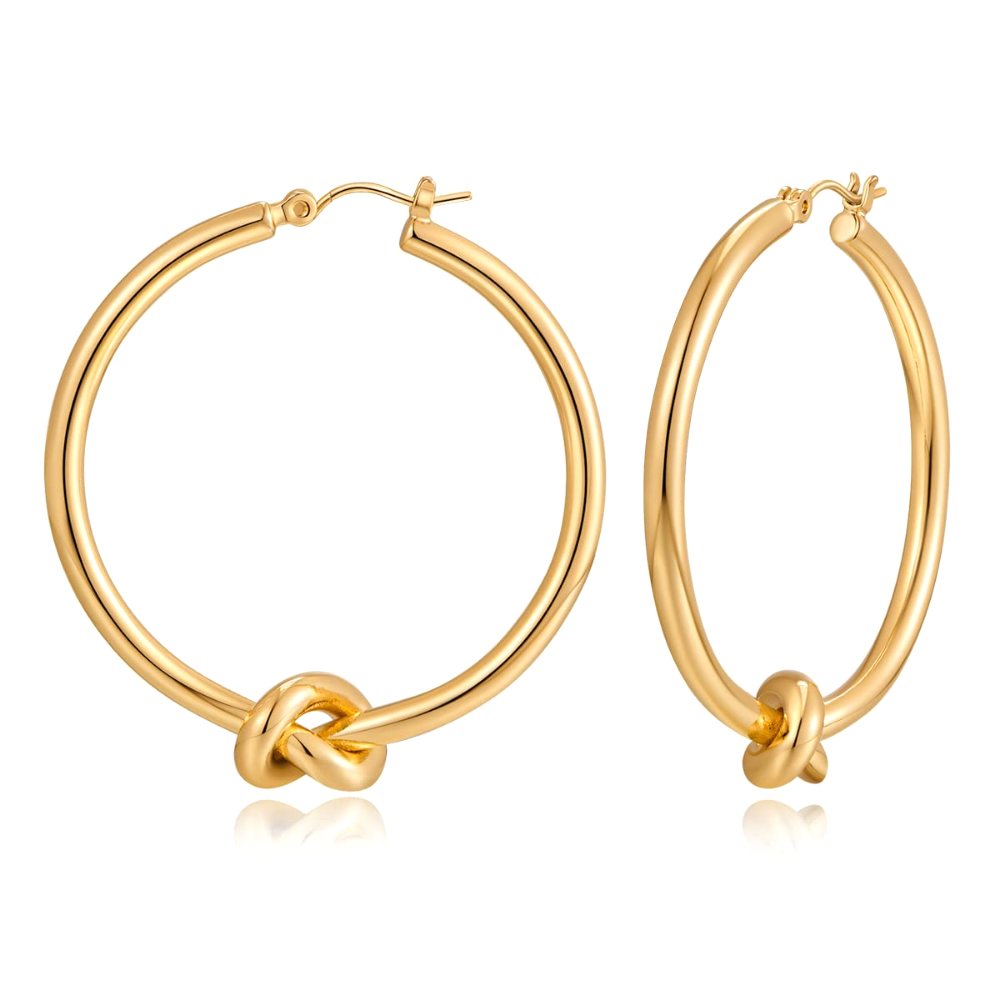
A hinged hoop has a short bar joined to the hoop by a hinge. Swing the bar open, pass it through the piercing from the front, and press it back into the notch until it clicks. Our knot hoops close this way, with no separate part to drop.
A latch back is a close relative. The wire of the hoop hooks into a small catch at the back of the ear, as on our triple hoop. With either one, line the bar up with its seat before you press. If it does not click with gentle pressure, turn the hoop slightly rather than forcing the hinge.
Clip-ons
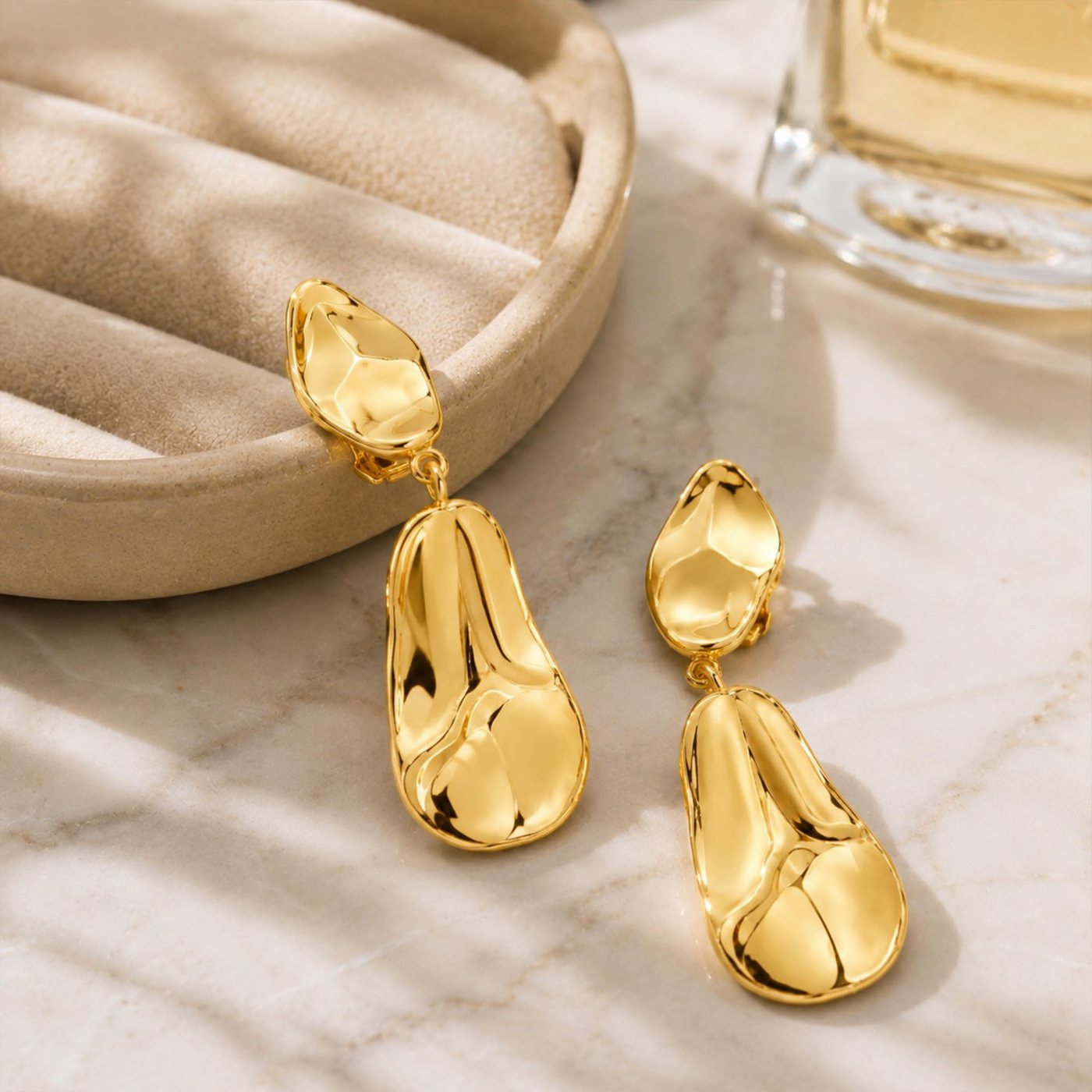
A clip-on has no post at all. A hinged clip closes behind the lobe and holds the earring by pressure, so you can wear a statement pair without a piercing. Our clip-on shelf repeats shapes from the pierced range: the hammered geometric drop, the knot, the twisted rope and a few enamel bows.
Place the clip toward the fleshy center of the lobe rather than the thin edge, where the pressure spreads more evenly. If it pinches after an hour, move it a few millimeters lower. A clip-on with a larger front, like the 1.6-inch hammered geometric clip-on, is worth a quick check in the mirror so it hangs straight.
Choosing a back for your day
- Commuting: a lever back or a hinged hoop. Both stay closed when a scarf or a bag strap brushes past.
- At a desk: a push back on a small stud sits flat and stays out of the way of a headset.
- An evening out: a lever back for any drop that moves while you dance.
- Under a hat: a flat stud, or a hinged hoop that closes flush.
- Changing pairs often: push backs are the fastest to swap.
- No piercing: the clip-on shelf.
Next time you open a product page, read the Earring back line before you look at the second photo. It tells you more about how the pair will wear than any angle of the shape.
A question about a piece in this note? Write to goldtone@yujiestore.com and the YUJIE team will answer.