
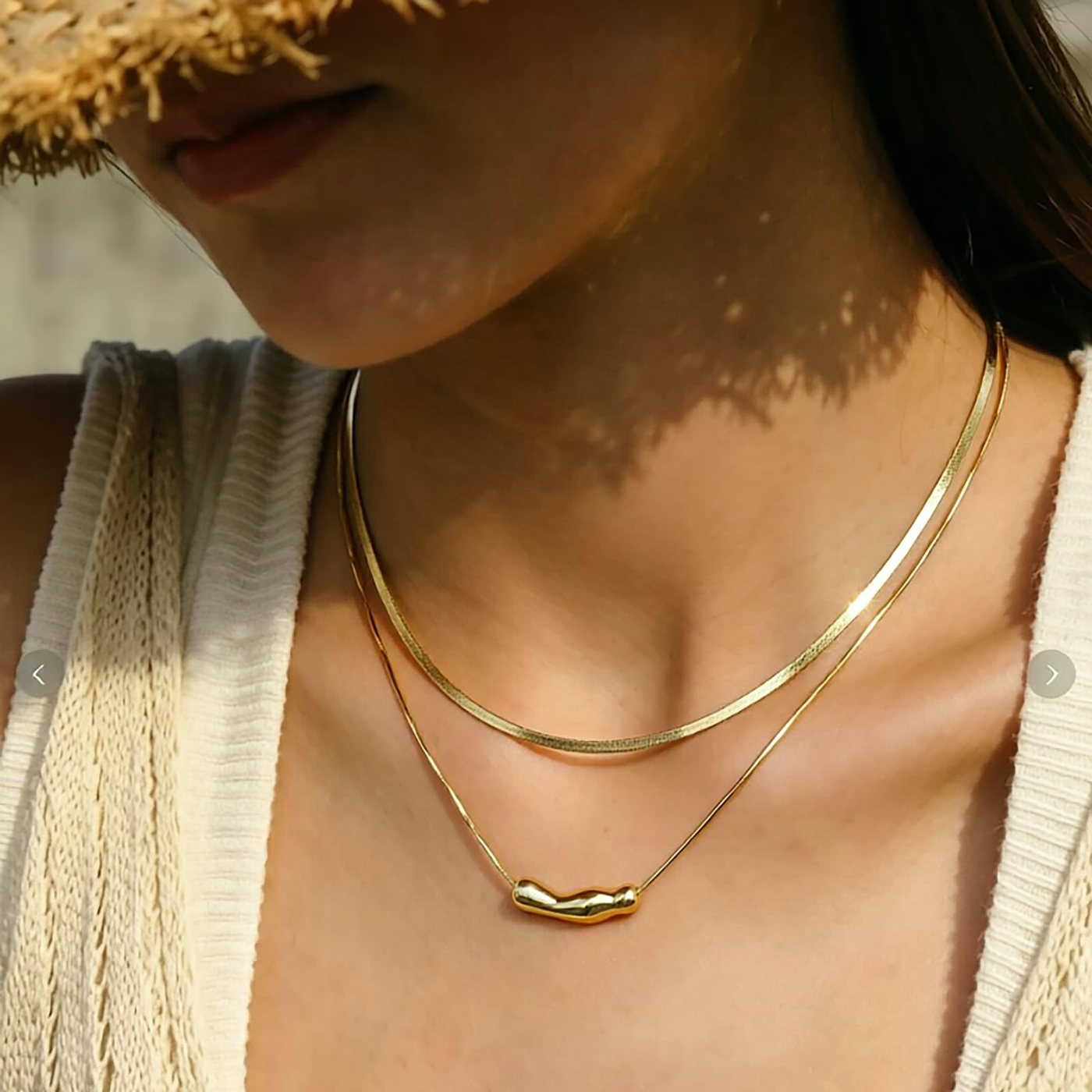
You put on a gold pendant and a beaded choker at breakfast, and by lunch there is a knot at the back of your neck and the pendant has crawled over the choker. Layering works when each necklace has its own height and its own weight. Here is how to plan that before you fasten the first clasp.
Start from the neckline
Your top decides how much room the necklaces get. A crew neck leaves a band just above the fabric: a choker sits there, and a chain long enough to clear the collar sits on top of the knit. A V-neck opens a long triangle, which is where a lariat earns its place, dropping its charm into the point of the V.
An open collar gives you the most space. A choker stays at the base of the neck, an 18-inch chain falls just below the collarbone, and a longer piece can hang into the opening of the shirt.
Space the lengths about two inches apart
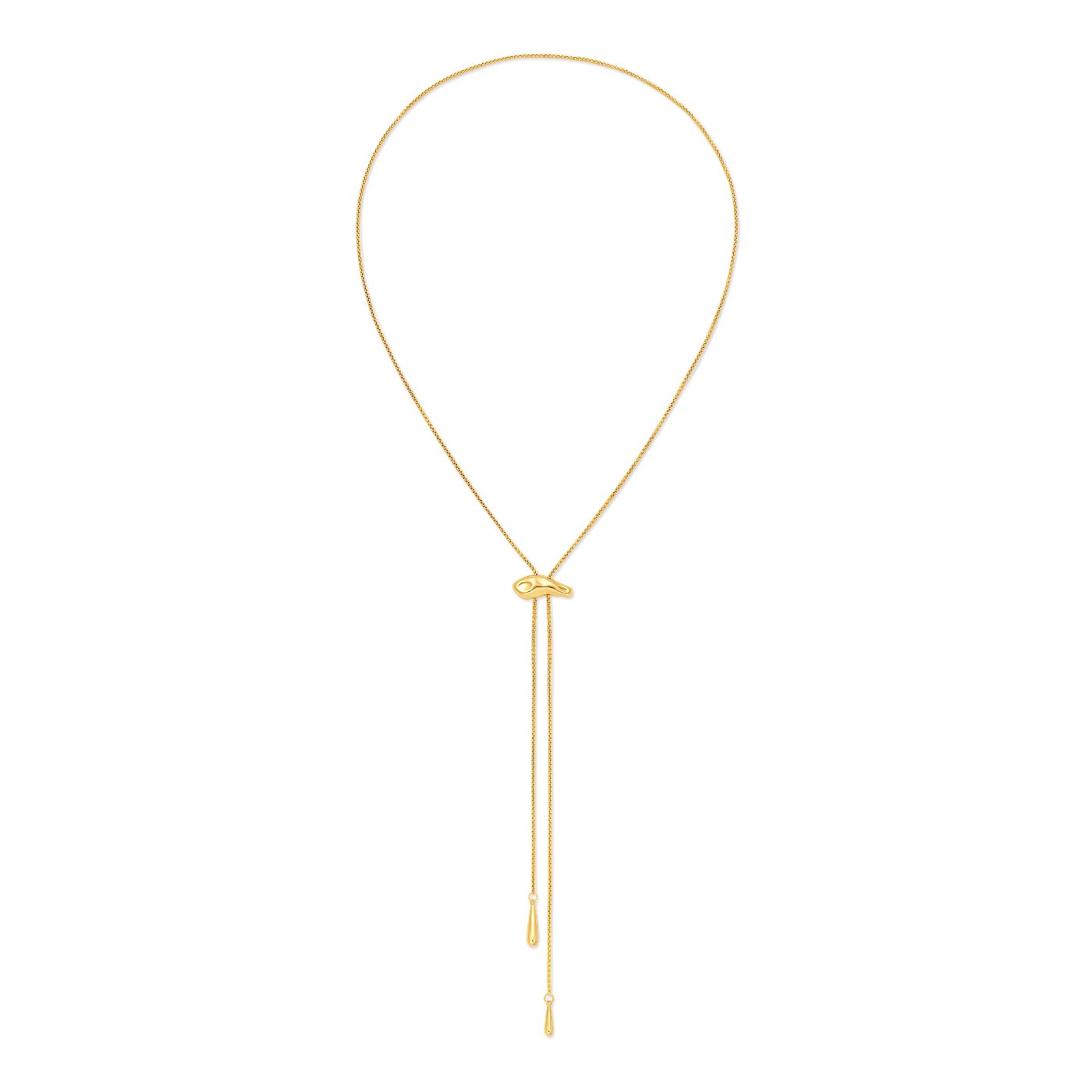
A gap of roughly two inches between layers lets each piece show and keeps the chains from lying on top of each other. The chains in our catalog with a listed length measure mostly 17 to 18 inches, so two of them worn together will sit at almost the same height.
For the second layer, reach for a chain with an extender, or for a lariat, whose front drop falls well below an ordinary pendant. A choker always goes on top, closest to the neck, where it anchors the stack.
Mix one heavy piece with light ones
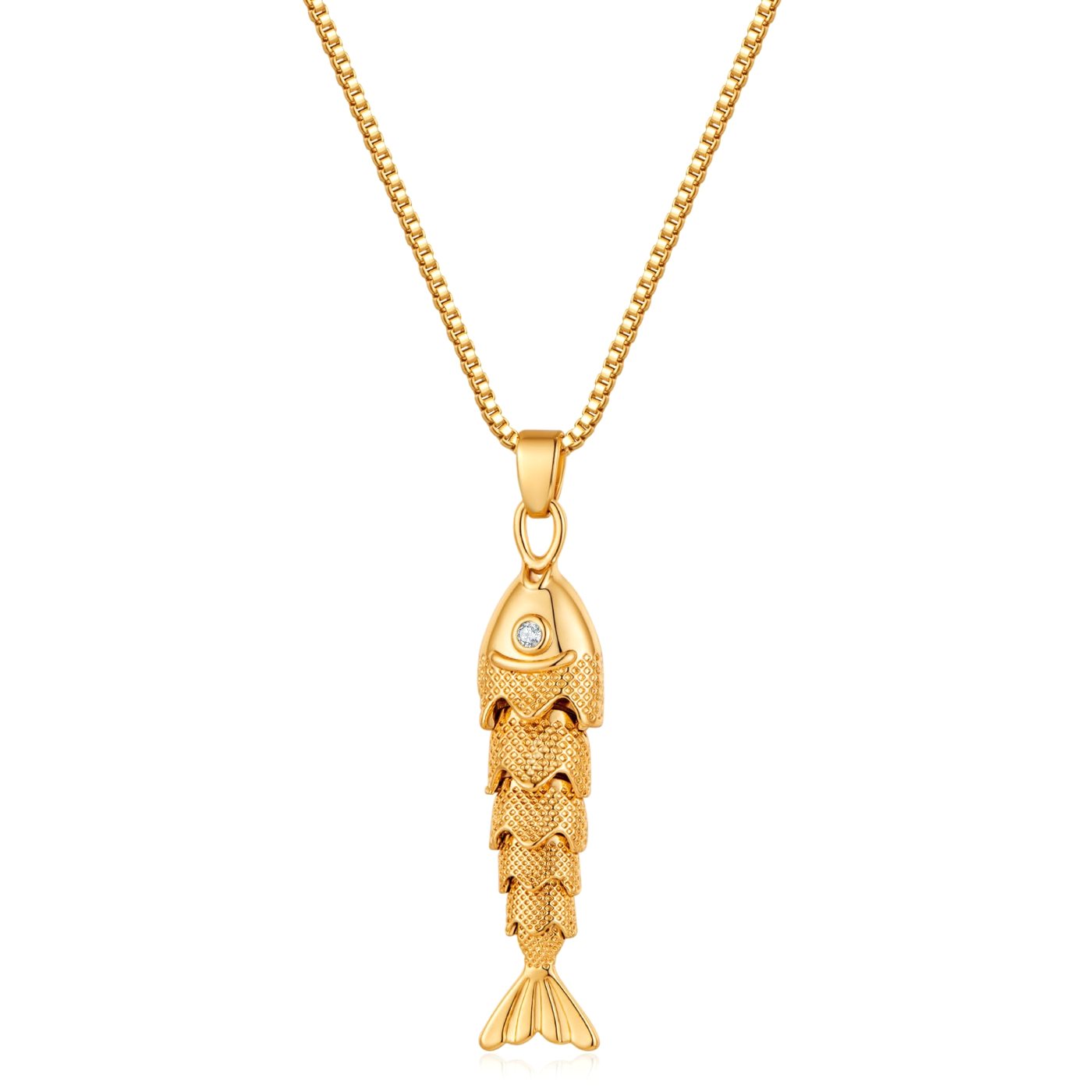
Two heavy necklaces fight. They slide against each other, pull their clasps to the front and twist into a rope. Pair one piece with weight or texture, such as a beaded choker, with one fine chain carrying a small charm, like the gold fish or a puffy heart.
Some pendants want the neckline to themselves. The bull skull pendant is sculpted and large, and it reads best worn alone on its chain, with nothing hanging beside it.
Mixing gold, silver and color
A two-tone piece is the easy bridge between metals. The oval pendant necklace and one of the bar lariats carry gold and silver in the same piece, so they sit comfortably with a gold chain and a silver ring.
Color works the same way. A resin heart choker in amber or tiger eye sits well above a plain gold pendant, because the gold repeats in the spacers between the beads. Keep one color family in the stack and it looks chosen rather than piled on.
Keeping layers from tangling
- Put them on from the shortest: the choker first, then the chain, then the lariat.
- Fasten each clasp before you add the next necklace, and turn the clasp to the back of your neck.
- Hang the heavier pendant lowest, so its weight pulls down rather than across the lighter chains.
- Most of our necklaces close on a lobster clasp, which you can open and shut with one hand.
- Store each necklace fastened and laid flat, in its own pouch or compartment.
Three layered looks
These use only pieces from our catalog, listed in the order you put them on.
- Color on top: a puffy resin heart choker, then a fine gold chain with a gold fish pendant. The heart carries the color at the base of the neck and the fish adds a spot of gold below.
- Mixed metals: the silver link choker, then the two-tone oval pendant necklace. The oval repeats the silver of the choker and adds gold.
- For a V-neck: a puffy heart choker in tiger eye, then a gold bar lariat. The lariat draws a long line down into the V, and the choker closes the top.
Stand in front of a mirror and turn your head both ways before you leave. If two pieces touch, let one out on its extender or swap it for a longer drop, and the stack stays apart until evening.
A question about a piece in this note? Write to goldtone@yujiestore.com and everyone at YUJIE will answer.